03 / 08Technical Information
Free-Cutting Steels
Steels with added sulphur, and lead in some grades, so that chips break easily; developed for high-speed series machining on automatic lathes.

Properties
The sulphur in free-cutting steels forms manganese sulphide inclusions that make chips short and easy to break. This allows high cutting speeds, a good surface finish and long tool life. In return, toughness and weldability are lower than in ordinary steels with the same carbon content.
Typical grades
- 11SMn30, 11SMnPb30 (low carbon)
- 10S20 (suitable for case hardening)
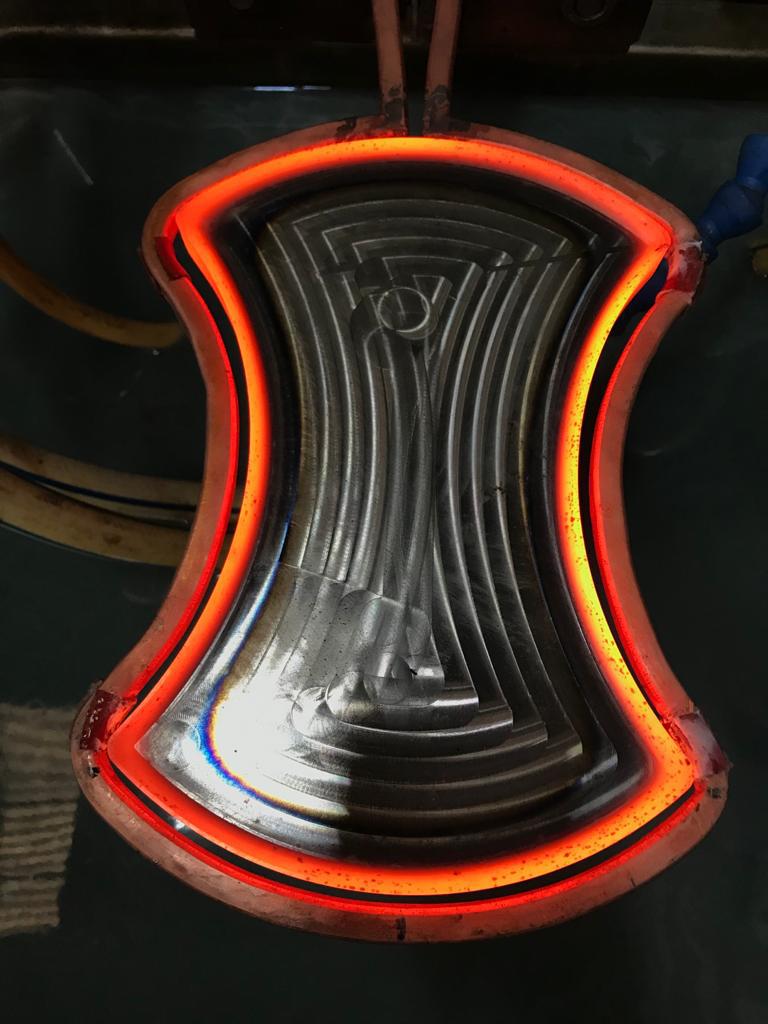
- 35S20, 44SMn28 (suitable for quenching and tempering and induction hardening)
Applications
Bolts, nuts, pins, bushings, fittings and small turned parts made in series.
Heat treatment notes
Low-carbon free-cutting steels need case hardening or carburising to gain hardness; medium-carbon grades (35S20, 44SMn28) can be quenched and tempered and induction hardened. Because of the sulphide inclusions, watch out for quench cracking on parts with sharp corners.
Which processes for this steel?
State the steel grade, target hardness and depth in the quote form; we will determine the suitable induction or heat treatment process together.
Quote in 3 steps
Your request goes straight to our quotations team and we get back to you as soon as possible.
- Job detailsTell us the service, the material and the quantity.
- Drawing and notesAttach your technical drawing if you have one and add any special requirements.
- Contact detailsLeave your contact details. Your request goes to our quotations team and you receive a confirmation email.
Related services
-
-
-